








- Home
- Explore our area
- Our towns
- Errenteria
Errenteria, at a glance


The Town of Errenteria, in the Oiartzun Valley, to the north east of the Province of Gipuzkoa, was founded in 1320 on receiving the Chapter of San Sebastián from Alphonse XI. Although the foundational document indicates the name of "Villanueva de Oiarso", the denomination "Rentería" was used from very early on due to its commercial port activities. The old part still has its original medieval layout.
The town´s industrial past has given way to bustling commerce and a wide range of cafes and restaurants. On a hill surrounded by countryside, the Fort of San Marcos offers 360º panoramic views. Not far from there are the megalithic routes leading to Aizpitarte caves and the Aitzetako Txabala dolmen, the antechamber of the Añarbe reservoir.
Town Hall of Errenteria

Built in the early 17th century, the "Casa Consistorial" or Town Hall of Errenteria has a square floor plan, built in the Renaissance style. In 1964 the building was declared a Provincial Historical Monument.
Parish Church of Nuestra Señora de la Asunción

Tri-apsidal medieval parish church made of sandstone. Highlights: "The High Altar" - Neoclassical altarpiece (18th century); the church has been designated a Historic Monument by the Basque Government. "The Ánimas Altar" - also considered a Historic Site by the Basque Government.
María Magdalena Basilica of pilgrims

The origin of Maria Magdalena Basilica is linked with the attendance of pilgrims on the St. James´ Way. Specifically, one of the functions of the Basilica, as in other towns of Gipuzkoa, was of a hospital.
Torrekua Medieval Tower House

Torrekua House has a noticeably square ground plan and hip roof. It stands at one end of the town on the corner of a block, from where it protected one of the entrance gates.
Morrontxo Medieval Tower House
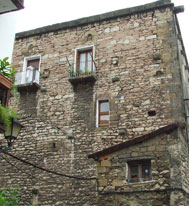
Morrontxo House, in a mixture of limestone and sandstone, has a predominantly square ground plan. It closes off the town to one end, standing at the head of one of the outside blocks of houses in the Old Part of town. It has a ground floor and three stories.
Zubiaurre Baroque Mansion
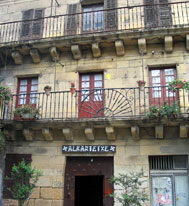
Zubiaurre mansion, dating from the 17th Century and Baroque in style, is the building that closed off one end of the town where it moreover protected one of the town gates.
Captain´s Baroque House

Martín de Rentería y Uranzu, born in the last third of the 15th Century and known as "el capitán de la Renteria" (the captain of Errenteria), is responsible for the name of this 17th Century Baroque house.
Augustinian Convent of 16th century
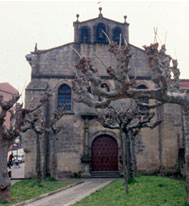
It was founded around 1543 by nuns from the order of St. Augustine. This highly austere church stands out for its main facade with its classical design and semicircular arched portal.
Iturriza Mansion of 18th century

In the late 18th century, Admiral Iturriza ordered that the coat of arms seen today be added to the facade of both this house and to the one next to it.
San Marko Fort, viewpoint of the area

Standing in a privileged spot deep in the countryside at less than 10 km from San Sebastian, San Marko Fort is most certainly the best vantage point in the towns Errenteria, Lezo, Oiartzun and Pasaia.